1-800-805-5783
  GET A QUOTE
![Blog-[x]cube LABS](https://d6fiz9tmzg8gn.cloudfront.net/wp-content/uploads/2016/06/blog_banner.jpg)

By [x]cube LABS
Published: Oct 29 2025
In a world driven by digital innovation, generative AI is emerging as a catalyst for transformation across industries.
From automating creative processes to redefining business operations, its power is undeniable.
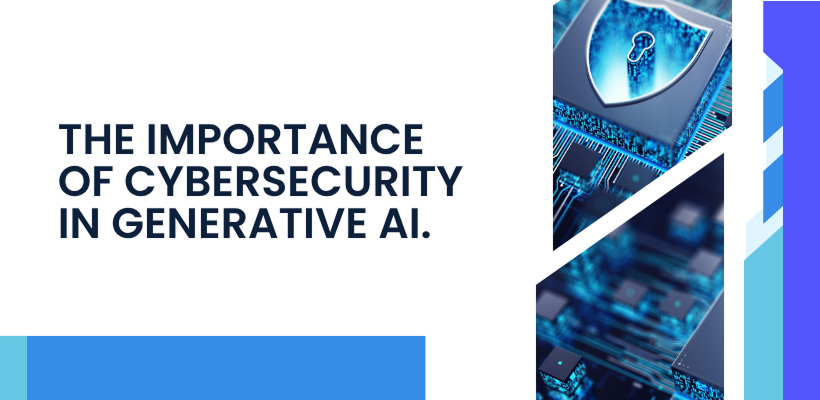
Yet as organizations embrace this innovation, an equally crucial dimension arises: Generative AI in Cybersecurity.
The intersection of generative AI and cybersecurity presents both extraordinary opportunities and unprecedented challenges.
Protecting sensitive data, mitigating risks, and maintaining ethical AI use are now at the heart of technological transformation.
Generative AI, a subset of machine learning, involves training models to create new data that mirrors existing patterns found in input datasets.
This innovation fuels creativity and efficiency across industries spanning content generation, product design, and research. According to McKinsey, generative AI could contribute trillions of dollars annually to the global economy by 2030.
However, with this advancement comes mounting responsibility. As generative AI relies on vast amounts of data, maintaining data integrity and privacy becomes a pressing concern.
Large language models (LLMs) can inadvertently memorize sensitive training data, making organizations vulnerable to potential leaks and misuse.
Addressing these concerns through Generative AI in Cybersecurity is now a critical component of responsible AI deployment.
Also Read: Generative AI Use Cases: Unlocking the Potential of Artificial Intelligence
Generative AI’s adaptability, creating text, images, code, and beyond, marks a breakthrough moment in AI research.
Yet, this same adaptability introduces complex security challenges. As AI tools become more integrated into enterprise systems, Generative AI in Cybersecurity encapsulates a growing effort to protect against AI-amplified cyber threats.
Generative AI functions as both a defender and a potential adversary in the cyber landscape.
When harnessed effectively, AI in cybersecurity can automate threat detection, predict attack patterns, and neutralize vulnerabilities faster than traditional systems.
Conversely, malicious actors can use generative AI to craft sophisticated attacks like adaptive phishing, deepfakes, or false data generation.
This duality highlights the need for rigorous AI cybersecurity solutions to safeguard digital ecosystems.
The democratization of generative AI tools has made it easier for cybercriminals to orchestrate highly personalized and deceptive attacks.
Synthetic content creation can lead to advanced fraud, impersonation, and disinformation campaigns.
This escalating threat landscape reinforces the significance of generative AI applications in cybersecurity, positioning the technology as both a challenge and a solution to modern digital defense mechanisms.
Modern cybersecurity teams now depend heavily on intelligent, AI-driven systems.
Generative AI models enhance defense mechanisms by simulating possible attack scenarios, identifying anomalies, and improving predictive response times.
Companies increasingly leverage artificial intelligence in cybersecurity to build resilient infrastructures capable of real-time detection and response.
This solidifies Generative AI in Cybersecurity as the cornerstone of next-generation protection strategies.
As cyberattacks grow in complexity, organizations must invest in educating employees about responsible AI usage.
Training programs focused on digital hygiene and AI-awareness empower teams to identify manipulation tactics and secure data appropriately.
Promoting literacy around how generative AI can be used in cybersecurity fosters a proactive defense culture, preparing organizations to stay a step ahead of evolving threats.
The future of AI cybersecurity is inseparable from ethical innovation.
Compliance with data privacy regulations and transparent AI practices ensures that generative AI strengthens, rather than weakens, trust.
Companies deploying generative AI applications should embed fairness and responsibility into every model’s lifecycle, balancing innovation with governance, to ensure technology remains a force for good.
To counter these challenges, organizations must adopt a proactive, multi-layered strategy that integrates generative AI cybersecurity solutions and governance frameworks.
Also Read: Generative AI Models: A Comprehensive Guide to Unlocking Business Potential
1. What is Generative AI in Cybersecurity?
It’s the use of generative AI to detect, prevent, and respond to evolving cyber threats through automation and predictive analysis.
2. How can generative AI be used in cybersecurity?
It can simulate attacks, detect anomalies, predict risks, and strengthen defense systems against new threats.
3. What are the main risks of generative AI?
Data leaks, model misuse, deepfakes, and privacy breaches are key risks if safeguards aren’t in place.
4. How does generative AI enhance data security?
It quickly identifies unusual patterns, predicts breaches, and supports zero-trust models for better protection.
5. What can businesses do to stay secure?
Adopt zero-trust frameworks, ensure compliance, train employees, and collaborate with cybersecurity experts.
Generative AI holds limitless potential to redefine innovation, yet it also demands unparalleled diligence.
Businesses can realize the advantages of Generative AI in Cybersecurity only by integrating strong defenses, ethical oversight, and continuous education.
From reinforced privacy measures to real-time threat monitoring, generative AI paves the way toward an era of resilient, adaptive cybersecurity.
By staying vigilant, compliant, and collaborative, organizations can turn generative AI from a security challenge into a strategic advantage.
At [x]cube LABS, we craft intelligent AI agents that seamlessly integrate with your systems, enhancing efficiency and innovation:
Integrate our Agentic AI solutions to automate tasks, derive actionable insights, and deliver superior customer experiences effortlessly within your existing workflows.
For more information and to schedule a FREE demo, check out all our ready-to-deploy agents here.