1-800-805-5783
  GET A QUOTE
![Blog-[x]cube LABS](https://d6fiz9tmzg8gn.cloudfront.net/wp-content/uploads/2016/06/blog_banner.jpg)

By [x]cube LABS
Published: Feb 06 2026
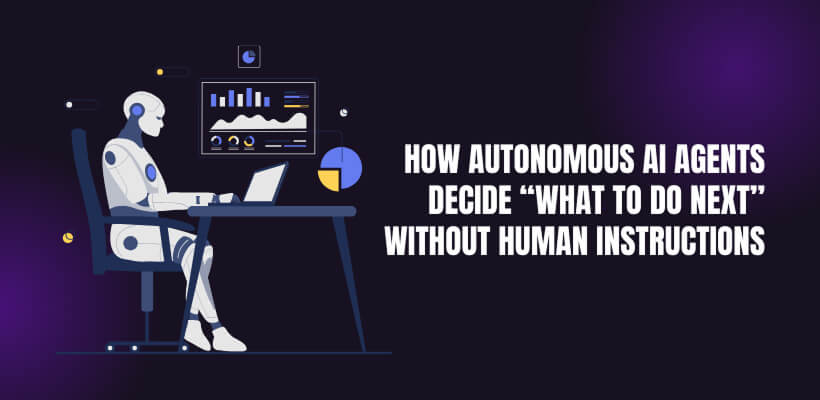
The future of intelligent automation isn’t about AI that simply answers questions; it’s about AI that can decide and act.
Today, autonomous AI agents are being designed to take high-level goals, break them into actionable steps, and choose what to do next without needing constant human prompts.
This shift is already underway: recent industry reporting suggests that a majority of enterprises are now exploring or deploying agentic systems, reflecting how quickly autonomous decision-making is moving from concept to operational reality. Discussions around autonomous agents AI news increasingly highlight how these systems are becoming central to modern enterprise automation.
This is why interest in AI agents is accelerating fast. In fact, McKinsey’s research shows that 23% of organizations are already scaling agentic AI systems, while 39% are actively experimenting with them, signaling that autonomy is quickly moving from concept to reality.
But how do these systems actually decide what comes next?
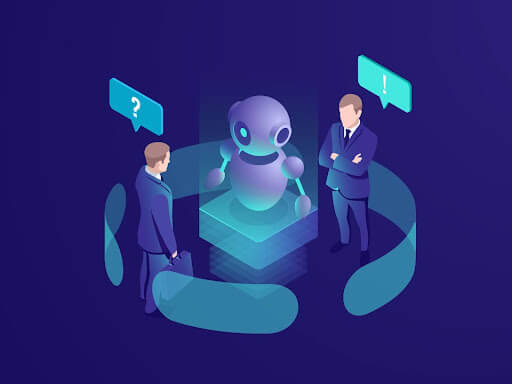
To understand decision-making, it helps to start with the basics: what are AI agents?
In simple terms, AI agents are systems that can observe an environment, interpret context, and take actions toward a goal.
When those systems operate with minimal supervision, sequence tasks, adapt to uncertainty, and choose actions dynamically, they become autonomous AI agents, often called autonomous agents. This broader field of autonomous agents AI is rapidly expanding across industries.
Unlike traditional automation, they don’t follow a fixed script. They decide based on intent, context, and outcomes.
Many emerging systems, including CAI agents (Conversational Autonomous Intelligent Agents), are being built specifically for this continuous decision-making across enterprise workflows and represent some of the best autonomous AI agents being explored today.
Every time an agent chooses “what to do next,” it typically follows a loop:
1. Observe the environment
The agent gathers signals: user requests, system status, business rules, and past interactions.
2. Reason toward a goal
It breaks down an objective into smaller steps.
For example, “approve a claim” becomes “verify documents → check policy → flag anomalies.”
3. Act through tools
The agent doesn’t work in isolation. It calls APIs, updates workflows, drafts outputs, or triggers next-stage actions.
4. Adapt based on feedback
The agent learns from outcomes and adjusts future decisions.
This loop is why autonomous AI agents feel less like software and more like digital operators, reinforcing why autonomous agents in AI are seen as the next evolution beyond static automation.
The rise of autonomous AI agents is tightly connected to the broader maturity of enterprise AI.
As organizations embed AI deeper into business functions, autonomy becomes the next logical layer. Instead of stopping at insight, enterprises are increasingly looking for systems that can move from understanding to execution.
This shift is also being reinforced by growing commercial investment. The global AI agents market is expected to reach about $7.6 billion in 2025 and grow at a robust CAGR of ~45.8% through 2030, highlighting how quickly agent-driven systems are becoming a foundational part of enterprise technology and shaping the broader autonomous AI and autonomous agents market.
In other words, autonomous decision-making is emerging not because agents are trendy but because enterprises are ready for autonomous AI agents that can operate across real workflows.

A practical example of an autonomous AI agent could be a support operations agent.
Instead of waiting for manual direction, the agent can:
At each stage, the agent decides what to do next based on context rather than a fixed rule tree.
These kinds of autonomous AI agents examples show how intelligent systems can coordinate real workflows without constant supervision.
That ability to coordinate actions autonomously is what defines autonomous AI agents in real business environments.
Autonomy does not mean removing humans from the loop. The best systems are designed for partnership between agents and human agents.
Autonomous systems use confidence thresholds:
This is how organizations maintain accountability while still benefiting from speed and scale.
It’s also why agent adoption continues to expand: enterprises want systems that can execute repetitive coordination, while humans focus on judgment-heavy decisions.
We are moving toward a world where autonomous AI agents are not features, but infrastructure embedded into workflows the way databases and cloud platforms are today.
But success will depend on designing agents that:
Organizations that treat agents as strategic systems, not experimental tools, will define the next era of intelligent work.
So how do autonomous AI agents decide what to do next without human instructions?
They observe context, reason toward goals, evaluate possible actions, execute through tools, and learn from outcomes while escalating to humans when risk demands it.
As enterprises embed AI into core functions and agent adoption rises rapidly, autonomous AI agents are quickly becoming a new layer of operational intelligence.
The next frontier isn’t AI that answers questions. It’s AI that knows what to do next.
1. What are autonomous AI agents?
Autonomous AI agents are systems that can observe, decide, and act toward goals without needing step-by-step human instructions.
2. How are autonomous agents different from traditional automation?
Traditional automation follows fixed rules, while autonomous agents reason, plan, and adapt actions based on context.
3. What is an autonomous AI agent example in business?
A support agent that prioritizes tickets, pulls context, executes resolutions, and escalates only when needed is a common example.
4. Do autonomous AI agents replace human agents?
No. They complement human agents by handling repetitive coordination while humans retain oversight of high-risk decisions.
5. Are organizations adopting AI agents at scale today?
Yes. Research suggests that AI agent adoption is already widespread, with many enterprises deploying or expanding agent-based workflows.
At [x]cube LABS, we craft intelligent AI agents that seamlessly integrate with your systems, enhancing efficiency and innovation:
Integrate our Agentic AI solutions to automate tasks, derive actionable insights, and deliver superior customer experiences effortlessly within your existing workflows.
For more information and to schedule a FREE demo, check out all our ready-to-deploy agents here.