
Artificial intelligence is evolving — not just in capability but in independence. While we’re used to AI models that react to prompts, Agentic AI is here to change the game by doing something most AI hasn’t done before: take initiative.
From intelligent assistants that follow orders to AI agents that create and execute their strategies, we’re witnessing a leap in how machines interact with the world. That leap is called Agentic AI.
This blog unpacks Agentic AI, how it works, and why it’s at the center of the next wave of automation. We’ll also explore real-world use cases, challenges, and what’s next.
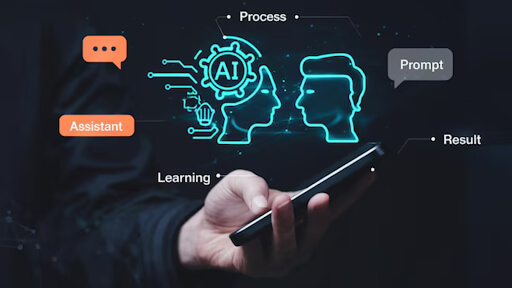
What is Agentic AI?
Agentic AI refers to AI systems that demonstrate autonomy, goal-directed behavior, and contextual reasoning. In simpler terms, it’s AI that doesn’t wait for you to tell it what to do — it figures out what needs to be done, and does it.
While traditional AI follows commands (“write an email,” “summarize this article”), agentic systems can set their objectives. They assess a situation, determine the best approach, and take action — all without constant human input.
Think of an agentic AI as a skilled assistant who understands your business, proactively manages projects, coordinates with vendors, flags risks, and suggests improvements without needing a nudge every step.
Key Characteristics
Agentic AI systems typically have:
- Autonomy: They can operate without human oversight for extended periods.
- Self-reflection: They evaluate the outcomes of their actions and adjust future behavior.
- Context-awareness: They recognize nuances in their environment and adapt accordingly.
- Tool usage: They often access APIs, apps, and data sources to complete tasks.
- Multi-step planning: They execute complex workflows rather than single commands.

Why Agentic AI Matters
The shift from static AI models to agentic systems is like upgrading from GPS navigation to a self-driving car. It’s not just helpful — it’s transformational.
Here’s why businesses, researchers, and developers are paying close attention:
- Scalability: Agentic AI doesn’t need to be micromanaged, allowing businesses to automate more tasks and scale operations faster.
- Efficiency: Autonomous agents can identify inefficiencies and optimize workflows in real-time.
- Innovation: These systems often uncover opportunities or solutions humans may miss, especially in data-rich environments.
Real-World Examples of Agentic AI in Action
1. Customer Support
AI chatbots used to rely on decision trees. Now, agentic AI systems like GPT-4-powered agents can:
- Detect customer sentiment
- Identify ticket priority
- Escalate issues automatically
- Draft and send follow-up messages
This reduces resolution times by up to 30%, according to Zendesk’s 2024 CX Trends Report.
2. Healthcare Diagnostics
Agentic AI can analyze a patient’s history, recommend tests, review results, and flag abnormalities. IBM’s Watson Health has shown that AI-assisted diagnosis can improve accuracy by up to 20% in oncology departments.
3. Software Development
Developer-focused tools like Devin (by Cognition Labs) are agentic AI engineers. They write, test, debug, and deploy code with minimal supervision. These agents have been benchmarked to complete complex dev tasks at 80% the speed of a junior engineer — and they’re improving fast.
4. Personal Productivity
AutoGPT, BabyAGI, and Microsoft’s Copilot agents are early consumer-grade examples. These tools book appointments, summarize long documents, generate reports, and make purchase decisions based on predefined goals.

Industry Adoption and Stats
The rise of Agentic AI is not a vague future — it’s already underway:
- 48% of enterprises are piloting agentic AI solutions as of Q1 2025. (Source: Deloitte AI Industry Tracker)
- 25% of companies using generative AI plan to implement agent-based systems by the end of 2025. This figure is expected to double by 2027.
- In life sciences, agentic systems are already used by 23% of organizations for managing clinical trials and drug discovery workflows. (Source: Ontoforce)
McKinsey estimates that, due to automation gains, businesses adopting agentic systems could cut operational costs by 15–25% within 3 years.
How Agentic AI Works (Under the Hood)
Most agentic systems consist of three major components:
- Cognitive Engine – A large language model (like GPT-4 or Claude) that understands tasks, interprets instructions, and reasons through problems.
- Memory & Feedback Loop – Systems use tools like vector databases or episodic memory to recall past events, learn from mistakes, and avoid repeating failures.
- Execution Environment—This includes access to the Internet, APIs, apps, and tools (like browsers, coding environments, or spreadsheets) to complete tasks.
Let’s say you tell an AI agent: “Plan my product launch campaign.”
A traditional AI might generate a checklist.
An agentic AI will:
- Research competitors
- Create marketing personas
- Draft emails, ads, and social posts
- Set a timeline
- Ask for feedback
- Update your plan as your needs evolve.e
All will be done with minimal input after the initial goal is defined.
Challenges of Agentic AI
Like any powerful tool, Agentic AI comes with risks.
1. Hallucination & Overconfidence
AI agents can confidently make decisions based on flawed data. Without human-in-the-loop checks, this could lead to costly errors, like publishing incorrect reports or misinterpreting legal documents.
2. Security Concerns
Because agentic AIs can take actions (e.g., browsing the web and sending emails), they are more susceptible to abuse or unintended consequences. If compromised, they can act as high-level access points.
3. Accountability & Ethics
Who’s responsible when an AI agent acts wrongly? The company? The developer? The user? These are legal gray zones being hotly debated in AI governance circles.
4. Over-Reliance
As agents become more capable, there’s a temptation to delegate too much. But like any assistant, they need boundaries, oversight, and periodic audits.
The Future of Agentic AI
We’re just getting started.
Experts believe agentic AI will evolve into multi-agent ecosystems — networks of AIs collaborating across departments, apps, and even companies.
By 2030, it’s predicted that:
- 60% of enterprise workflows will include autonomous agents.
- Most project management will be handled by AI, with humans overseeing outcomes.
- Entire startup teams could be built from AI agents working in concert.
This isn’t science fiction. Tools like MetaGPT and CrewAI already allow teams of agents (e.g., a coder, a manager, a tester) to coordinate tasks with minimal human instruction.

Conclusion
Agentic AI is more than a buzzword — it’s the next chapter in how we work, create, and problem-solve.
With the ability to self-direct, plan, and adapt, these AI systems go beyond automation. They introduce the possibility of collaboration between humans and machines, not just as tools, but as co-workers with initiative.
For businesses, the message is clear: don’t just adopt AI—adopt agents. In a future driven by initiative, waiting to be told what to do might mean getting left behind.
FAQs
1. What is agentic AI?
Agentic AI refers to AI systems that can set goals, make decisions, and act autonomously without constant human input.
2. How is agentic AI different from traditional AI?
Unlike traditional AI, which reacts to specific prompts, agentic AI can plan, adapt, and take initiative based on its environment.
3. What are some real-world uses of agentic AI?
Examples include autonomous financial advisors, AI coding assistants, virtual healthcare agents, and customer support bots.
4. What are the key benefits of agentic AI?
Agentic AI increases efficiency, reduces the need for manual oversight, and enables intelligent automation across complex workflows.
How Can [x]cube LABS Help?
At [x]cube LABS, we craft intelligent AI agents that seamlessly integrate with your systems, enhancing efficiency and innovation:
- Intelligent Virtual Assistants: Deploy AI-driven chatbots and voice assistants for 24/7 personalized customer support, streamlining service and reducing call center volume.
- RPA Agents for Process Automation: Automate repetitive tasks like invoicing and compliance checks, minimizing errors and boosting operational efficiency.
- Predictive Analytics & Decision-Making Agents: Utilize machine learning to forecast demand, optimize inventory, and provide real-time strategic insights.
- Supply Chain & Logistics Multi-Agent Systems: These systems improve supply chain efficiency by using autonomous agents to manage inventory and dynamically adapt logistics operations.
- Autonomous Cybersecurity Agents: Enhance security by autonomously detecting anomalies, responding to threats, and enforcing policies in real-time.
- Generative AI & Content Creation Agents: Accelerate content production with AI-generated descriptions, visuals, and code, ensuring brand consistency and scalability.
Integrate our Agentic AI solutions to automate tasks, derive actionable insights, and deliver superior customer experiences effortlessly within your existing workflows.
For more information and to schedule a FREE demo, check out all our ready-to-deploy agents here.