The traditional supply chain landscape has been characterized by its complexity, vulnerability, and susceptibility to disruptions.
Technology has the potential to revolutionize AI in supply chain management by harnessing data-driven insights, predictive analytics, and automation, offering a beacon of hope for a more efficient and reliable AI in the future of supply chains.
The advent of artificial intelligence (AI) presents a promising solution to the challenges faced by the traditional supply chain landscape.
Factors such as global economic fluctuations, natural disasters, and geopolitical tensions have made it increasingly difficult for businesses to maintain efficient and reliable supply chains.
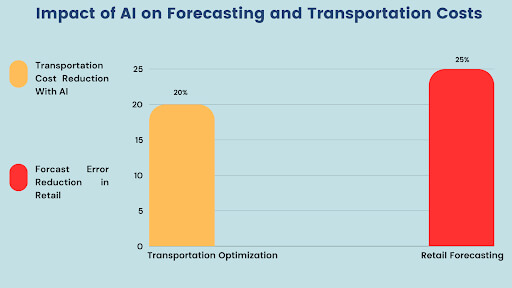
Artificial intelligence (AI) is also transforming the transportation and logistics industries. By analyzing real-time traffic data, weather conditions, and other crucial factors, AI can optimize routes, reduce transportation costs, and improve delivery times.
This not only decreases fuel consumption and travel time but also enhances customer satisfaction through timely deliveries.
AI’s ability to process vast volumes of data highlights its immense potential in strengthening supply chain resilience and agility. Its intelligent insights can improve risk management, transportation planning, inventory optimization, and demand forecasting.
Furthermore, AI can significantly enhance supply chain performance by automating repetitive tasks and processes, leading to substantial cost savings and increased operational efficiency.
Understanding the Role of AI in Supply Chain Management
Artificial intelligence has become a powerful tool for transforming supply chain operations.
By leveraging its capabilities, businesses can enhance efficiency, reduce costs, and improve decision-making.
At the core of AI are several key components:
- Machine Learning applies training algorithms on large datasets to recognize patterns and make forecasts.
- Deep Learning is a subset of machine learning that employs complex neural networks to analyze complex data, such as images and natural language.
- Natural Language Processing (NLP) enables computers to understand and interpret human language, facilitating communication and data analysis.
AI can be applied to various features of AI in supply chain management, including:
Demand Forecasting:
- Accurate predictions: AI algorithms analyze historical data, market trends, and external factors to forecast demand.
- Optimized inventory levels: By anticipating demand, businesses can avoid stockouts and excess inventory.
Inventory Optimization:
- Intelligent replenishment: AI can determine optimal reorder points and quantities based on demand variability, lead times, and inventory costs.
- Real-time visibility: AI-powered systems offer accurate, real-time insights into inventory levels, enabling businesses to make informed decisions.
Transportation Planning:
- Optimized routes: AI can analyze traffic conditions, distances, and delivery time windows to determine the most efficient routes.
- Load optimization: AI can help optimize truck loading to maximize space utilization and ease transportation costs.
Risk Management:
- Predictive analytics: AI can analyze data patterns to identify potential risks, such as disorders in the AI supply chain or quality issues. It can also help identify potential disruptions, such as natural disasters or geopolitical tensions, by analyzing historical data and real-time market conditions. Generative AI can also simulate various risk scenarios to develop robust mitigation strategies.
- Proactive measures: By anticipating risks, businesses can take proactive measures to mitigate their impact.
Quality Control:
- Defect detection: AI-powered systems can detect product defects using image recognition and machine vision.
- Quality assurance: AI can help ensure products meet quality standards throughout the AI supply chain.
The Emerging Role of Generative AI (GenAI)
A significant update to the AI landscape is the rise of Generative AI (GenAI), which creates new content (e.g., text, data, simulations) based on its training data. GenAI brings new capabilities to the supply chain:
- Conversational Interfaces: Planners can ask clarifying questions in natural language, receiving contextualized, data-driven answers and even requesting visualizations or data summaries. This streamlines decision-making by eliminating the need to search through multiple resources.
- Scenario Planning: GenAI can rapidly run complex “what-if” scenarios, simulating the effects of global shocks, supplier disruptions, or policy changes on operations, and suggest multiple courses of action.
- Automated Content Creation: It can automatically generate content such as purchase orders, first drafts of supplier contracts, or compliance documents, significantly increasing productivity in procurement and logistics.
Enhancing Supply Chain Resilience
The COVID-19 pandemic exposed the vulnerabilities of global AI in supply chains. Disruptions caused by lockdowns, border closures, and supply shortages highlighted the urgent need for greater resilience.
It empowers proactive risk management, enhances visibility, and facilitates effective contingency planning, instilling confidence in businesses facing potential disruptions.
Leveraging AI for Risk Identification and Assessment
To identify potential risks, AI can explore vast amounts of data from various sources, including chronological trends, real-time market conditions, and geopolitical events.
Machine learning algorithms can catch patterns and anomalies that may indicate impending disruptions.
By proactively assessing risks, businesses can take preventive measures to mitigate their impact.
Utilizing Predictive Analytics to Anticipate Disruptions
Predictive analytics, a subset of AI, uses historical data and statistical standards to forecast future events.
By analyzing past trends, AI can predict potential disruptions, such as natural disasters, labor shortages, or transportation bottlenecks, enabling businesses to develop contingency plans and allocate resources accordingly.
Implementing AI-Powered Supply Chain Visibility and Traceability
AI-powered supply chain visibility and traceability provide real-time information about the location and quality of products throughout the supply chain, enabling businesses to track shipments, identify bottlenecks, and respond promptly to disruptions.
Blockchain technology, often integrated with AI, can ensure the authenticity and integrity of data, enhancing transparency and trust.
Case Studies of Successful AI Applications
- During the COVID-19 pandemic, many companies leveraged AI to optimize their supply chains. For example, retailers used AI to predict demand fluctuations and allocate resources accordingly. Manufacturers implemented AI-powered supply chain visibility to track shipments and identify alternative sourcing options.
- In the automotive industry, AI predicts component shortages and optimizes logistics routes to minimize disruptions. It can also identify potential delays by analyzing historical and real-time traffic information and suggesting alternative transportation modes.
Improving Supply Chain Agility
AI has emerged as a potent tool to enhance supply chain agility, empowering businesses to respond to disruptions and evolving customer needs with speed and efficiency.
Optimizing Inventory Management
AI-powered inventory management systems can significantly reduce holding costs and improve stock levels.
AI algorithms can accurately predict demand and optimize inventory replenishment by analyzing historical data, demand patterns, and real-time information.
This helps avoid stockouts while minimizing excess inventory.
Accurate Demand Forecasting
AI-driven demand forecasting utilizes advanced statistical models and machine learning techniques to deliver more precise predictions.
By considering economic indicators, seasonal trends, and customer behavior, AI can help businesses anticipate demand fluctuations and adjust their supply chains accordingly.
Transportation and Logistics Optimization
AI can revolutionize transportation and logistics operations. AI-powered route planning algorithms can optimize delivery routes, reducing travel time and fuel consumption.
Load optimization tools can ensure efficient utilization of transportation resources, minimizing costs and environmental impact.
Real-time tracking systems powered by AI provide visibility into the movement of goods, enabling proactive response to unexpected events.
Case Studies of AI-Enabled Supply Chain Agility
- Many companies have successfully implemented AI solutions to improve their supply chain agility. For instance, during the COVID-19 pandemic, several retailers used AI-powered demand forecasting to anticipate shortages and adjust their inventory levels accordingly.
- Another example is the use of AI for disaster relief. In the aftermath of natural disasters, AI-powered logistics platforms can quickly coordinate relief efforts, optimize resource allocation, and ensure the timely delivery of essential supplies.
Addressing Challenges and Considerations
AI can revolutionize supply chain management by optimizing processes, improving efficiency, and enhancing decision-making. However, its implementation is not without challenges.
Data Quality and Availability: The Fuel for AI
High-quality, trustworthy data is the lifeblood of AI applications. The AI in the supply chain encompasses data from various sources, including sensors, IoT devices, ERP systems, and transportation networks. Data accuracy, consistency, and completeness are crucial for AI models to deliver accurate insights and predictions.
Data availability can also be a Challenge:
Some AI in supply chain data may be siloed differently from departments or systems, making it hard to access and combine. Implementing data governance strategies and investing in data management tools can help address these issues.
Integration with Existing Systems: Bridging the Gap
Integrating AI solutions with living AI in supply chain systems can be a complex process. Technical challenges such as compatibility issues, data formats, and legacy systems may arise.
A phased approach can mitigate integration risks. Starting with more minor, less complex use cases and gradually expanding AI implementation can reduce disruption and ensure a smooth transition.
Ethical Considerations: Humanizing AI
AI has the potential to displace jobs in the supply chain. Automating inventory management and transportation planning tasks could lead to job losses.
It’s essential to consider the social and economic implications of AI adoption.
Strategies like retraining programs and job creation initiatives can help mitigate the adverse impacts and ensure a just transition.
Bias in AI algorithms is another ethical problem. If AI models are instructed on biased data, they may memorialize existing inequalities.
Ensuring fairness and transparency in AI development is crucial.
Cybersecurity: Protecting the Digital Supply Chain
Cybersecurity is a top priority for AI in the supply chain. As AI systems become increasingly interconnected, they are vulnerable to cyber threats such as data breaches, ransomware attacks, and disruptions in the supply chain.
Implementing robust cybersecurity measures is essential. This includes:
- Regular security audits: Assessing vulnerabilities and identifying potential risks.
- Network segmentation: Isolating critical systems to limit the spread of malware.
- Employee training: Educating employees about cybersecurity best practices.
- Incident Response Planning: Designing a Plan to Respond to and Recover from Cyberattacks.
Addressing these challenges and references can help organizations harness the power of AI to optimize their supply chain operations, enhance efficiency, and gain a competitive advantage.
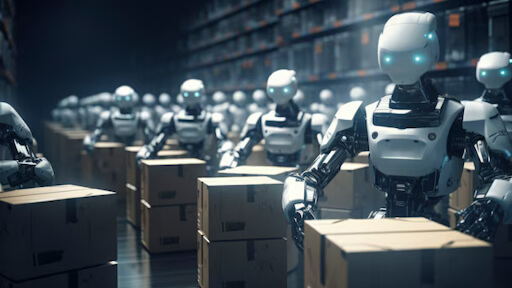
The Future of AI in Supply Chain Management
Looking ahead, AI continues to shape the next generation of supply chains by enabling organizations to make autonomous decisions, optimize logistics, and use resources sustainably.
Emerging trends include:
- AI-powered digital twins for predictive maintenance and scenario planning
- GenAI-driven forecasting to model new market behaviors
- Sustainable AI optimization to reduce carbon footprints
Organizations that embrace and implement AI-driven supply chain transformation today equip themselves to navigate tomorrow’s uncertainties with speed, efficiency, and confidence.
Conclusion
In conclusion, AI offers immense potential to transform supply chain and logistics management.
By leveraging its capabilities, businesses can improve efficiency, reduce costs, and enhance customer satisfaction.
As AI continues to develop, we can expect even more innovative applications.
AI offers immense potential to transform the AI supply chain by optimizing processes, improving efficiency, and enhancing decision-making.
However, realizing these benefits requires careful consideration of data quality, integration, ethical considerations, and cybersecurity challenges.
Addressing these issues can help organizations harness the power of AI to create more resilient, sustainable, and competitive supply chains.
AI can help businesses navigate disruptions and ensure a more trustworthy and efficient supply chain by enabling proactive risk management, predictive analytics, and improved visibility.
As the world becomes increasingly interconnected and volatile, adopting AI in supply chain management will be crucial for long-term success.
FAQ’s
1. How does AI enhance supply chain resilience?
AI enhances supply chain resilience by predicting disruptions, optimizing inventory levels, and facilitating faster decision-making through real-time data analysis.
2. How does AI improve demand forecasting?
AI analyzes historical data and market trends, providing accurate demand predictions that help reduce overstocking and stockouts.
3. Is AI integration expensive for supply chains?
Initial costs may be high, but the long-term savings from efficiency, reduced disruptions, and better resource management typically outweigh the investment.
4. What are some typical AI applications in supply chains?
AI is used for predictive maintenance, demand forecasting, inventory management, and optimizing transportation routes.
5. How does AI help with risk management in supply chains?
AI identifies potential risks by analyzing data from various sources, enabling proactive measures to mitigate disruptions.
How Can [x]cube LABS Help?
At [x]cube LABS, we craft intelligent AI agents that seamlessly integrate with your systems, enhancing efficiency and innovation:
- Intelligent Virtual Assistants: Deploy AI-driven chatbots and voice assistants for 24/7 personalized customer support, streamlining service and reducing call center volume.
- RPA Agents for Process Automation: Automate repetitive tasks like invoicing and compliance checks, minimizing errors and boosting operational efficiency.
- Predictive Analytics & Decision-Making Agents: Utilize machine learning to forecast demand, optimize inventory, and provide real-time strategic insights.
- Supply Chain & Logistics Multi-Agent Systems: Enhance supply chain efficiency by leveraging autonomous agents that manage inventory and dynamically adapt logistics operations.
- Autonomous Cybersecurity Agents: Enhance security by autonomously detecting anomalies, responding to threats, and enforcing policies in real-time.
- Generative AI & Content Creation Agents: Accelerate content production with AI-generated descriptions, visuals, and code, ensuring brand consistency and scalability.
Integrate our Agentic AI solutions to automate tasks, derive actionable insights, and deliver superior customer experiences effortlessly within your existing workflows.
For more information and to schedule a FREE demo, check out all our ready-to-deploy agents here.