Banking in 2025 is not just about transactions—it’s about intelligence, speed, and trust. Customers expect faster services, personalized offers, and instant fraud protection. Traditional systems can’t keep up with those expectations. That’s where Agentic AI in banking steps in.
Unlike earlier AI tools that only followed rules, Agentic AI acts with autonomy. It learns from context, adapts to changing situations, and makes proactive decisions. For banks, this means increased efficiency, reduced risks, and improved customer experiences.
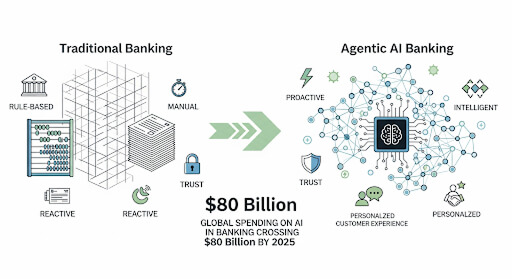
Global spending on Agentic AI in banking is expected to cross $80 billion by 2025, with Agentic AI driving the largest share of this growth. Let’s break down the top use cases of agentic AI in banking that you’ll see everywhere this year.
1. Smarter Fraud Detection and Prevention
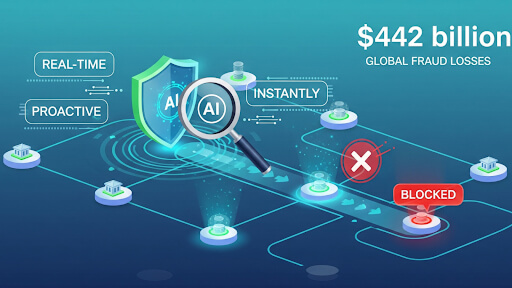
Fraud costs banks billions every year. In 2024 alone, financial institutions lost over $442 billion worldwide to fraud.
Agentic AI doesn’t just flag suspicious activity—it acts in real time.
- It scans transactions across millions of accounts in milliseconds.
- It detects unusual spending behavior instantly.
- It automatically blocks or freezes compromised accounts.
For example, instead of calling you hours later about a suspicious payment, your bank can stop it before the money leaves your account. That’s proactive fraud protection powered by AI agents in banking.
Expert Quote:
“Agentic AI allows fraud detection systems to move from passive alerts to active defense. That changes the game for customer security.”
— Sarah Gomez, Chief Risk Officer, FinTech Insights
2. Personalized Financial Guidance

Most customers don’t want to read long policy documents or navigate complex financial jargon. They want clear answers and tailored advice.
Agentic AI steps in as a 24/7 financial guide.
- It analyzes your spending, savings, and goals.
- It suggests budget improvements or investment opportunities.
- It alerts you when you’re overspending.
Imagine logging into your app and seeing:
“Your monthly dining expenses increased by 20%. Here’s how adjusting your budget saves you $300 this quarter.”
This is not just customer service—it’s personalized banking at scale.
3. Lightning-Fast Loan Approvals
Traditional loan approvals take days—or weeks. Customers upload documents, wait for reviews, and deal with back-and-forth calls.
Agentic AI in banking streamlines this entire process:
- It verifies income, credit scores, and identity instantly.
- It checks compliance requirements in real time.
- It gives you an approval (or rejection) in minutes.
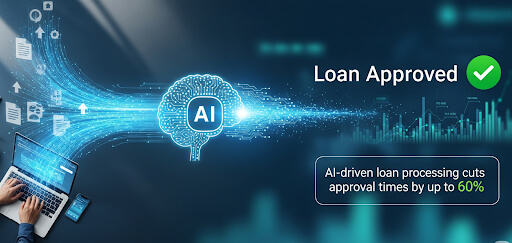
According to McKinsey’s 2025 report, AI-driven loan processing cuts approval times by up to 60%. That means more customers get faster access to funds, and banks close deals quickly.
4. Hyper-Personalized Customer Support
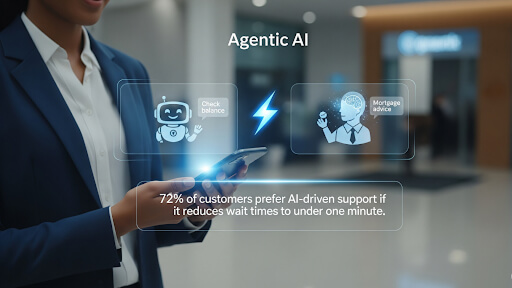
Bank call centers are often overloaded. Long wait times frustrate customers.
With agentic AI in banking, support becomes instant:
- AI chatbots handle common queries (balance, transfers, password resets).
- Virtual agents provide answers to policy-related questions with full context.
- Complex cases route directly to human advisors.
- The result? Faster resolutions, fewer mistakes, and happier customers.
A 2024 survey found that 72% of customers prefer AI-driven support if it reduces wait times to under one minute.
5. Predictive Risk Management

Banks face constant risks—from credit defaults to market shifts.
Agentic AI in banking monitors live financial data and predicts risks before they escalate, enabling proactive risk management.
- It warns when a borrower shows early signs of default.
- It analyzes market volatility and suggests portfolio adjustments.
- It tracks regulatory updates and flags compliance risks.
This proactive monitoring protects both banks and customers.
6. Automated Wealth and Investment Management
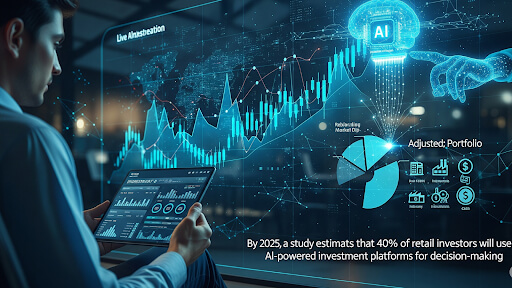
Wealth management is no longer reserved for the wealthy. AI agents bring competent investment advice to everyone.
- They monitor global markets in real time.
- They rebalance portfolios instantly to reduce risks.
- They suggest personalized investment strategies tailored to individual goals.
For instance, if the market dips, your AI agent adjusts your portfolio automatically to minimize losses.
By 2025, a study estimates that 40% of retail investors will use AI-powered investment platforms for decision-making.
7. Streamlined Regulatory Compliance
Banking regulations are strict and constantly evolving. Manual compliance checks are expensive and slow.
Agentic AI simplifies compliance by:
- Monitoring transactions in real time for violations.
- Generating automated compliance reports.
- Alerting compliance officers instantly when rules change.
This reduces penalties, improves trust, and keeps banks audit-ready.
8. Enhanced Credit Scoring Models
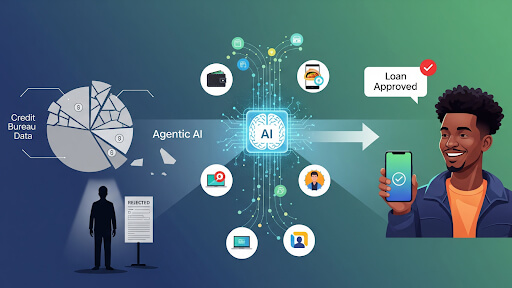
Traditional credit scores often miss essential data points. They don’t account for modern financial behavior, such as digital wallets or income from the gig economy.
Agentic AI builds more innovative credit models by analyzing:
- Alternative data (bill payments, rental history, mobile transactions).
- Spending patterns.
- Market conditions.
This makes lending more inclusive, especially for underbanked populations.
Challenges Ahead
Agentic AI in banking isn’t a magic wand. Banks still face hurdles:
- Data privacy: Protecting customer information is critical.
- Bias in models: AI must avoid unfair lending decisions.
- Integration: Legacy systems often struggle with AI adoption.
The banks that solve these challenges first will lead the industry.
Benefits of Agentic AI in Banking
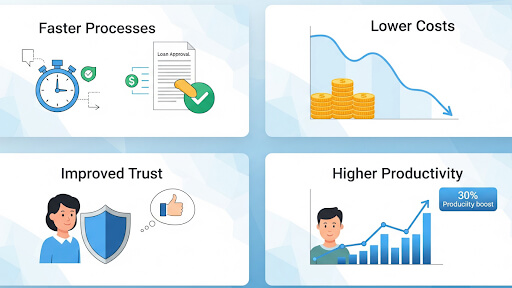
Faster Processes
AI agents handle millions of data points instantly, reducing delays in fraud checks, loan processing, and compliance.
Lower Costs
Automating repetitive tasks saves banks billions in operational costs each year.
Improved Trust
Real-time fraud prevention and personalized guidance strengthen customer loyalty.
Higher Productivity
According to a 2025 report, banks that utilize increase in productivity agentic AI experience a 30% productivity boost in back-office operations.
Expert Insight
“Agentic AI is not just another tool—it’s an active partner in decision-making. Banks that deploy it in 2025 gain speed, security, and customer trust at levels not possible before.”
— Dr. Raj Mehta, AI Strategy Lead, Global Banking Forum
Conclusion
By 2025, agentic AI use cases in banking will no longer be futuristic—they will be standard practice. From fraud prevention to personalized financial guidance, AI agents make banking faster, safer, and more customer-friendly.
The banks that adopt agentic AI in banking now will gain a decisive competitive edge. For customers, that means fewer headaches, better protection, and more innovative money management.
Agentic AI doesn’t just improve banking—it reshapes it for the future.
FAQs
1. What is agentic AI in banking?
Agentic AI in banking refers to AI systems that act autonomously, making real-time decisions to improve fraud detection, risk management, and customer service.
2. How does agentic AI improve customer experience?
It provides instant support, faster loan approvals, proactive fraud alerts, and personalized financial guidance—improving speed and trust.
3. What are the top agentic AI use cases in banking?
Fraud detection, loan approvals, personalized support, investment management, compliance, and risk prediction.
4. How secure is agentic AI in banking?
With proper data governance and compliance, AI-driven systems are more secure than traditional manual monitoring.
How Can [x]cube LABS Help?
At [x]cube LABS, we craft intelligent AI agents that seamlessly integrate with your systems, enhancing efficiency and innovation:
- Intelligent Virtual Assistants: Deploy AI-driven chatbots and voice assistants for 24/7 personalized customer support, streamlining service and reducing call center volume.
- RPA Agents for Process Automation: Automate repetitive tasks like invoicing and compliance checks, minimizing errors and boosting operational efficiency.
- Predictive Analytics & Decision-Making Agents: Utilize machine learning to forecast demand, optimize inventory, and provide real-time strategic insights.
- Supply Chain & Logistics Multi-Agent Systems: Enhance supply chain efficiency by leveraging autonomous agents that manage inventory and dynamically adapt logistics operations.
- Autonomous Cybersecurity Agents: Enhance security by autonomously detecting anomalies, responding to threats, and enforcing policies in real-time.
- Generative AI & Content Creation Agents: Accelerate content production with AI-generated descriptions, visuals, and code, ensuring brand consistency and scalability.
Integrate our Agentic AI solutions to automate tasks, derive actionable insights, and deliver superior customer experiences effortlessly within your existing workflows.
For more information and to schedule a FREE demo, check out all our ready-to-deploy agents here.