
At the core of almost every breakthrough we witness in 2026, from autonomous agent squads managing financial risks to conversational interfaces that understand human emotion, lies a single, foundational technology. While terms like “Agentic AI” and “Autonomous Systems” dominate current technology headlines, the true architectural engine driving this revolution is the artificial neural network. To truly grasp the power of modern artificial intelligence, one must demystify the core mathematical framework that makes it all possible: deep learning.
For decades, traditional computer science relied on explicit instruction; programmers wrote rigid code telling a machine exactly how to behave in every scenario. Neural networks completely inverted this paradigm. Instead of being programmed, these systems learn from experience, mapping complex inputs to accurate outputs by analyzing massive datasets. Understanding how these networks function is like looking at the underlying physics of the digital world.
What is a Neural Network?
An artificial neural network is a computational model inspired by the structural architecture of the human brain. Just as our brains rely on interconnected biological neurons to process sensory data, an artificial network utilizes layers of mathematical nodes to interpret complex information.
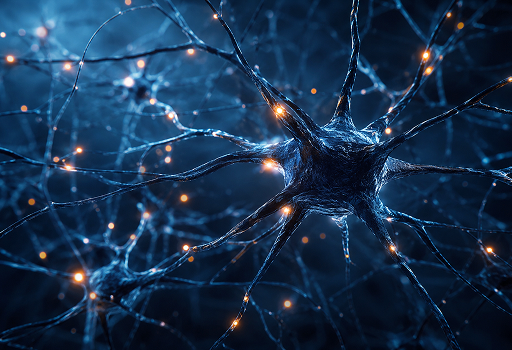
When we talk about deep learning, the word “deep” refers specifically to the scale of these layers. A network is considered deep if it contains multiple hidden layers stacked between the input mechanism and the final output. This layered structure allows the network to break down massive problems into smaller, hierarchical pieces of logic, enabling machines to identify intricate patterns in unstructured data like video streams, spoken language, or medical imagery.
The Anatomy of a Neural Network
To understand the internal mechanics, we must look at the structural components that form a standard deep network.
1. The Input Layer
This is the entry gateway for data. If you are training a model to detect financial anomalies, the input layer receives raw data features such as transaction values, timestamps, and geographic coordinates. Each node in this layer represents a single variable from the dataset.
2. The Hidden Layers
This is where the actual “reasoning” happens. A deep network features multiple hidden layers stacked sequentially. As data passes through these layers, the network extracts increasingly abstract features. In a computer vision system, the first hidden layer might look for basic edges, the second layer identifies shapes, and the final hidden layer recognizes entire distinct objects.
3. The Output Layer
The final destination of the processing pipeline. This layer converts the abstract representations calculated by the hidden layers into a usable conclusion. Depending on the task, the output could be a binary choice (e.g., “Fraudulent” or “Legitimate”), a continuous numeric prediction, or a probability distribution across thousands of distinct words.
The Secret Sauce: How Information Flows
A neural network does not simply guess an answer; it processes information through a precise mathematical pipeline governed by three main concepts: weights, biases, and activation functions.
Weights and Biases (The Tuning Knobs)
Every connection between nodes across layers has an associated “weight,” which represents the strength or importance of that specific connection. When data moves from one node to the next, it is multiplied by this weight. Additionally, each node has a “bias” value added to the sum, which shifts the activation threshold up or down.
In the beginning, these weights and biases are completely random. The entire process of deep learning is essentially an algorithmic quest to find the perfect values for these billions of mathematical parameters so the network can predict outcomes accurately.
Activation Functions (The Gatekeepers)
Once a node sums up all its weighted inputs and biases, it passes that total through an activation function. This mathematical function determines whether, and to what intensity, the node should pass its signal to the next layer.
Without activation functions, a neural network would just be a giant, linear calculator, incapable of understanding complex, non-linear relationships. Functions like ReLU (Rectified Linear Unit) or Sigmoid introduce the mathematical complexity needed to map unpredictable real-world data.
The Learning Process: Practice Makes Perfect
A neural network learns through a continuous, bidirectional feedback loop consisting of two primary phases.
Forward Propagation
During forward propagation, data enters the input layer, moves through the mathematical matrix of the hidden layers, and generates a prediction at the output layer. Because the network’s parameters are unoptimized at the start, this initial prediction is usually completely wrong.
The Loss Function and Backpropagation
To fix its mistakes, the network uses a “Loss Function” to calculate exactly how far off its prediction was from the actual ground truth. This error value is then sent backward through the network in a process called backpropagation.
Using an optimization algorithm called Gradient Descent, backpropagation calculates how much each individual weight and bias contributed to the error. The network then makes microscopic adjustments to those parameters, tightening the connection strings. This forward-and-backward loop is repeated millions of times across vast datasets until the loss value drops near zero, signaling that the network has successfully learned the pattern.
From Neural Networks to Modern Agent Ecosystems
Looking forward, the baseline capabilities of deep learning have evolved into the foundational layer for autonomous business agents. We are no longer just building models that output a static classification; we are building systems that use neural reasoning to execute multi-step operations.

For example, when a modern product discovery agent assists an e-commerce shopper, it isn’t just matching keywords. Deep neural networks allow the agent to understand the semantic intent of the query, analyze visual similarities in real time, and adjust recommendations based on contextual behavior. By giving these deep networks memory and tool-use capabilities, the industry has successfully bridged the gap between pure pattern recognition and active operational agency.
Conclusion
Neural networks are the invisible architecture powering the modern cognitive era. By mimicking the basic principles of biological learning, these systems have unlocked capabilities that were deemed impossible just a generation ago.
As deep learning architectures continue to advance, the models will become more efficient, more interpretable, and more deeply integrated into our physical and digital worlds. Demystifying the mechanics of weights, biases, and propagation reveals that AI is not magic; it is an incredibly elegant combination of mathematics and computational scale, continuously rewriting the boundaries of innovation.
FAQ
1. What is the difference between Machine Learning and deep learning?
Machine learning is a broad field of computer science where algorithms learn from data. Deep learning is a specific subset of machine learning that utilizes multi-layered artificial neural networks to automatically learn complex patterns without human feature engineering.
2. Why do neural networks need so much data to work?
Because they start with completely random parameters, neural networks need to see millions of examples during the backpropagation phase to accurately fine-tune their internal weights and biases. Without enough data, the network cannot find the true patterns and may overfit to the training set.
3. What is backpropagation in a neural network?
Backpropagation is the learning mechanism of the network. It calculates the error of an output and sends that information backward through the layers, adjusting individual weights and biases to reduce the error in future predictions.
4. What are hidden layers?
Hidden layers are the internal processing steps located between the input and output layers. They extract features and identify abstract patterns from the raw data, allowing the network to perform complex reasoning.
5. Can neural networks learn indefinitely?
While a network’s weights can continue to adjust as new data is introduced, care must be taken to prevent “catastrophic forgetting,” where learning a new task causes the model to erase its memory of previously learned skills. Modern architectures use specialized replay buffers to mitigate this.
What [x]cube LABS Builds
We help enterprises become AI-native; not by adding AI on top of existing systems, but by rebuilding the intelligence layer from the ground up. With 950+ products shipped and $5B+ in value created for clients across 15+ industries, here is what we bring to the table:
1. Autonomous AI Agents
We design and deploy agentic AI systems that sense, decide, and act without human bottlenecks, handling complex, multi-step workflows end-to-end with measurable resolution rates and no manual intervention.
2. Enterprise Voice AI
Our voice platform Ello puts production-ready voice agents in front of your customers in minutes. Zero-latency conversations across 30+ languages, with no call centers and no wait times.
3. AI-Powered Process Automation
We replace manual, error-prone workflows with intelligent automation across invoicing, compliance, customer service, and operations, freeing your teams to focus on work that requires human judgment.
4. Predictive Intelligence and Decision Support
Using machine learning and real-time data pipelines, we build systems that forecast demand, flag risk, optimize inventory, and surface strategic insights before your teams need to ask for them.
5. Connected Products and IoT
We design and build IoT platforms that turn physical devices into intelligent, connected systems with built-in real-time monitoring, remote management, and condition-based automation.
6. Data Engineering and AI Infrastructure
From data lakes and ETL pipelines to AI-ready cloud architecture, we build the foundation that makes everything else possible, scalable, reliable, and designed to grow with your business.
If you are looking to move from AI experimentation to AI-native operations, let’s talk.