
Introduction
Let’s face it—very few of us leap out of bed excited to engage with business tools, tedious training modules, or endless forms. But what if these tasks were transformed into engaging experiences, reminiscent of our favorite games? Not superficially gimmicky, but genuinely enjoyable, motivating, and even addictive.
This transformation is precisely what gamification achieves. It cleverly leverages the compelling aspects of games—progress, rewards, status, and challenges—and integrates them into everyday workflows, apps, and customer interactions. Think about that satisfying surge of dopamine when you maintain your streak on Duolingo, check off tasks in Asana, or achieve a new milestone in your fitness app.
Businesses globally have rapidly adopted gamification. In fact, over 70% of Fortune 500 companies utilize gamification strategies in various capacities—from employee training and performance incentives to customer retention and engagement strategies. This is not merely trendy; it’s demonstrably effective. The global gamification market currently exceeds $30 billion and continues to grow, indicating its powerful appeal rooted deeply in human psychology—our inherent craving for progress, recognition, and incremental victories.
This comprehensive guide covers everything essential about gamification—its psychological foundations, tangible benefits, practical applications, and actionable steps to seamlessly integrate gamification into your business or product.
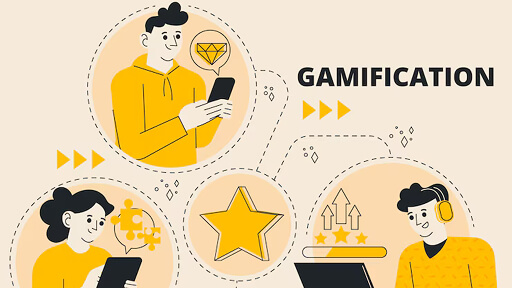
Understanding the Psychology Behind Gamification
Gamification is highly effective because it taps into fundamental human psychology:
- Dopamine and Reward Systems: Every reward triggers dopamine release, making even minor achievements feel gratifying. This biological response reinforces behaviors that align with business goals.
- Challenge and Progress: Humans thrive on visible progress. A progress indicator displaying “You’re 80% there!” can powerfully motivate task completion.
- Social Signals: Leaderboards and shared challenges ignite a sense of competition and camaraderie, appealing directly to our social instincts.
Effective gamification isn’t merely ornamental—it strategically designs experiences that are deeply rewarding and habit-forming.
Boosting Employee Engagement
Transforming Training Experiences
Traditional corporate training often lacks engagement. Gamification turns this around:
- Deloitte introduced leaderboards and missions into leadership training, resulting in a 37% increase in repeated engagement.
- Siemens cut plant manager training times by 50% using simulation-based games.
- McDonald’s UK reduced training time significantly with a gamified cash register simulator.
Motivating Sales Teams
Gamification naturally complements sales environments, harnessing inherent competitiveness:
- Reward systems based on XP (experience points) for achieving goals.
- Milestones for closing deals, completing demos, or surpassing targets.
- Mini-tournaments energize sales teams and boost morale, leading to measurable improvements in performance and productivity.
Enhancing Daily Productivity
Internal tools integrated with gamification drive everyday productivity:
- Microsoft employs an internal “Productivity Score.”
- Asana motivates task completion with delightful visual rewards like flying unicorns.
These subtle features significantly enhance employee satisfaction and efficiency.
Increasing Customer Engagement and Loyalty
Gamification deeply engages customers by fostering loyalty and habitual usage:
Loyalty Programs with Impact
- Starbucks and Sephora leverage tiered reward systems that motivate customers towards frequent purchases.
- Duolingo uses streaks effectively to foster daily engagement.
Streamlined Onboarding
Guided onboarding experiences dramatically reduce drop-off rates:
- Slack and Notion guide new users step-by-step with progress bars.
- Robinhood employs milestones to encourage immediate user action and long-term engagement.
Social Competition and Community
Competitive elements enhance user interaction:
- Nike Run Club fosters friendly competition.
- MyFitnessPal encourages peer-to-peer motivation.
- Airbnb increased referrals significantly through gamified status and badges.
Integrating Gamification into UX and Product Design
Effective gamification seamlessly integrates into product design:
Visible Progress Indicators
- LinkedIn’s profile completion progress bar motivates users to enhance their profiles.
- Khan Academy uses progress paths and achievement badges to encourage continuous learning.
Smart Feedback Loops
Effective feedback nudges users towards desired actions:
- Messaging like “You’re 10% away from Gold status!” or “Only one item left in stock!” prompts quick, positive user responses.
Minimizing Drop-Off Rates
- Duolingo’s streak reminders leverage loss aversion, significantly boosting retention.
- Discord increases engagement by rewarding users who actively support servers.

Gamification in Marketing and Monetization
Gamification isn’t limited to engagement—it actively drives conversions and sales:
Freemium Conversions
- Candy Crush and Spotify leverage emotional investment for premium upselling effectively.
Scarcity and Urgency
- Amazon and Booking.com use scarcity marketing (e.g., “Only 2 left!”) to drive rapid purchasing decisions.
Community and Contest Strategies
- GoPro and Red Bull utilize gamification to generate significant user-generated content, amplifying community engagement and loyalty.
Essential Gamification Tools
Leverage existing tools to integrate gamification effortlessly:
- Kahoot! for interactive learning scenarios.
- Bunchball, Mambo.IO, Badgeville, Funifier provide robust, enterprise-ready gamification solutions.
- Zapier + spreadsheets or no-code platforms like Bubble allow for budget-friendly, agile implementation.
Important Considerations and Potential Pitfalls
Gamification is powerful but requires thoughtful application:
- Avoid Addiction: Excessive reliance on rewards can foster compulsive behavior.
- Maintain Intrinsic Motivation: Balance extrinsic rewards to prevent loss of inherent user motivation.
- Privacy and Transparency: Clearly communicate data practices to maintain trust.
Ensure empathy and positive engagement remain central to your gamification strategy.
Emerging Trends and Future Prospects
The gamification landscape is rapidly evolving:
- AI-driven personalization customizes rewards based on user behavior.
- Metaverse and Virtual Reality deliver immersive, experiential training and collaboration.
- Blockchain technology introduces novel reward mechanisms such as NFTs and token-based incentives.
Gamification is shifting towards deeply personal, dynamic, and emotionally resonant experiences.
Implementing Gamification: A Step-by-Step Approach
- Define clear business objectives (engagement, retention, sales).
- Understand user motivations and preferences.
- Select appropriate mechanics (points, badges, leaderboards).
- Start small, test individual features, and scale based on feedback.
- Continuously refine using analytics, A/B testing, and direct user feedback.

Conclusion
Properly executed, gamification transforms mundane tasks into engaging, productive activities. Companies embracing gamification report an impressive 48% increase in user engagement—transforming their workforce, customer base, and bottom line. Start implementing simple gamification strategies today to see substantial, tangible benefits quickly.
FAQs
Does gamification suit B2B applications?
Absolutely, especially in training, adoption, and retention.
What if gamification appears gimmicky?
Subtlety and natural integration ensure genuine value without distractions.
Is game design expertise essential?
Not necessarily. Basic mechanics (points, badges, feedback) are simple yet effective.
Cost considerations?
Off-the-shelf and no-code solutions keep costs manageable.
Measuring success?
Focus on behavior change indicators (engagement levels, frequency, conversions).
How can [x]cube LABS help?
[x]cube LABS’s teams of game developers and experts have worked with globally popular IPs such as Star Trek, Madagascar, Kingsman, Adventure Time, and more in association with Cartoon Network, FOX Studios, CBS, Dreamworks, and others to deliver chart-topping games that have garnered millions of downloads. With over 30 global awards for product design and development, [x]cube LABS has established itself among global enterprises’ top game development partners.
Why work with [x]cube LABS?
- Experience developing top Hollywood and animation IPs – We know how to wow!
- Over 200 million combined downloads – That’s a whole lot of gamers!
- Strong in-depth proprietary analytics engine – Geek mode: Activated!
- International team with award-winning design & game design capabilities – A global army of gaming geniuses!
- Multiple tech frameworks built to reduce development time – Making games faster than a cheetah on turbo!
- Experienced and result-oriented LiveOps, Analytics, and UA/Marketing teams—we don’t just play the game; we master it!
- A scalable content management platform can help us change the game on the fly, which is great because we like to keep things flexible!
- A strong team that can work on multiple games simultaneously – Like an unstoppable gaming hydra!
Contact us to discuss your game development plans, and our experts would be happy to schedule a free consultation!